
Crowns and Bridges in Pleasant Hill, CA
- Modern Technology
- Cosmetic Dentistry
- Personalized Care
- Crafted Smiles
- Natural Results
- Same-Day Solutions
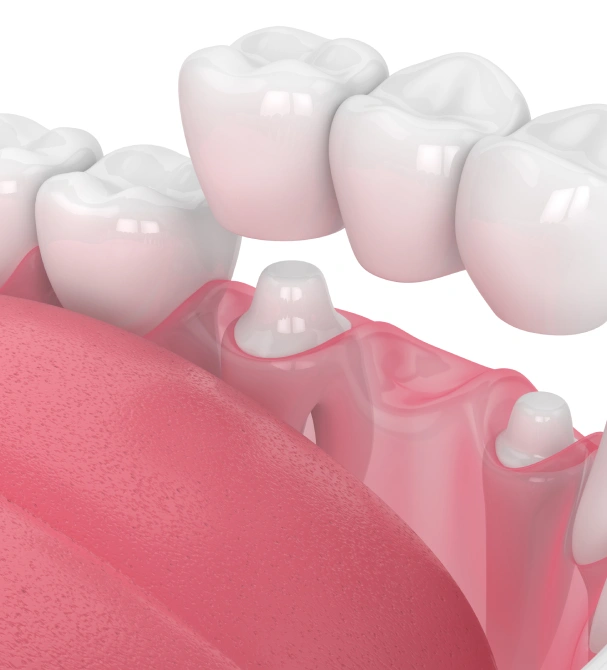
Full Strength and Function Restored
Dental crowns and bridges restore damaged, weakened, or missing teeth to full function and natural appearance, protecting compromised tooth structure and replacing gaps that affect how you chew, speak, and maintain the alignment of surrounding teeth. Leaving a damaged or missing tooth unaddressed accelerates wear on adjacent teeth and can shift the bite over time. Patients across Contra Costa County who have been told a tooth “needs a crown” and have been putting it off through busy quarters at work, through school pickups, through weekends on the Canal Trail, understand how that decision compounds quietly. Getting restorative work right the first time is what prevents the more complex situation six months from now.
At Cosmetic Dental Spa Ricardo M. Perez, DDS, we offer dental crowns and bridges in Pleasant Hill, CA, with options to minimize the number of appointments required.
What Are Dental Crowns and Bridges?
Crowns for teeth are a full-coverage restoration that fits over the entire visible portion of a tooth, from the gumline up. It is used when a tooth has been compromised by decay, fracture, a large filling, or root canal treatment to the point where a filling alone cannot adequately protect what remains. Crowns are fabricated from porcelain, zirconia, or ceramic materials that match the natural tooth in both appearance and function.
A dental bridge uses crowns on the teeth adjacent to a gap (the abutment teeth) to anchor a false tooth (the pontic) in the space left by a missing tooth. Bridges are a fixed, non-removable option for replacing a single tooth or a few consecutive missing teeth without implant surgery. Both restorations are calibrated to your bite and shade-matched to the surrounding teeth, so they blend into your smile without disrupting its appearance.
What Can Crowns and Bridges Address?
Cracked, Fractured, or Broken Teeth
A tooth that has cracked deeply or fractured in a way that compromises its structural integrity requires full coverage to prevent further breakage and preserve the root. A crown distributes bite force evenly across the remaining structure.
Severely Decayed Teeth
When decay has destroyed too much tooth to support a filling or inlay, a crown rebuilds the tooth above the gumline and seals the underlying structure from further bacterial exposure.
Missing Teeth (Bridge Option)
A gap left by a missing tooth allows adjacent and opposing teeth to shift toward the space, altering the bite and increasing wear on the remaining teeth. A bridge fills the gap with a fixed, functional replacement.
Large or Worn Fillings
When an existing filling has failed or grown so large that the remaining tooth structure is at risk of fracturing, replacing it with a crown provides more comprehensive and durable coverage.
Who Are Crowns and Bridges For?
Patients with a cracked, severely decayed, or structurally compromised tooth that cannot be adequately restored with a filling
Anyone who has completed root canal therapy and needs the treated tooth protected and restored
Patients missing one or a few adjacent teeth who prefer a fixed restoration over a removable partial denture
Individuals with existing crowns or large fillings that have failed and need replacement
Patients whose goals include a natural-looking result that blends with the surrounding smile
When Are Crowns and Bridges Not the Right Fit?
The tooth has sufficient structure for a less invasive option
An inlay or onlay may restore a damaged tooth while preserving more natural tooth structure than a full crown. Dr. Perez will assess which restoration is most appropriate.
Periodontal disease is active
Crowns and bridges placed over a foundation of unhealthy gum tissue and compromised bone will not perform predictably. Periodontal treatment to stabilize the foundation is the first step.
Implants are a preferred replacement
For patients missing a tooth and interested in an independent replacement that does not involve the adjacent teeth, a dental implant is an alternative worth evaluating alongside a bridge.
Our Crowns and Bridges Process
Examination and Treatment Planning
We evaluate the affected tooth or gap with clinical examination and imaging. For bridges, the abutment teeth are assessed to confirm they can support the restoration. The shade, material, and design are decided before preparation begins.
Tooth Preparation and Impressions
For a crown, the tooth is shaped to create room for the restoration. For a bridge, both abutment teeth are prepared in the same manner. Impressions or digital scans are taken to guide fabrication. A temporary restoration is placed while the permanent crown or bridge is being made.
Permanent Placement
When the restoration returns from the lab, it is fitted, adjusted for bite, and bonded into place. Dr. Perez checks the margins, the contact with adjacent teeth, and the bite before the appointment concludes.
Before and After Your Appointment
Before Your Appointment
- Inform the team of any sensitivity, bite changes, or discomfort around the tooth being treated so it can be factored into the preparation plan.
- If the crown is following a root canal, timing the crown placement promptly after the procedure reduces the risk of the treated tooth fracturing before it is protected.
After Your Appointment
- Temporary crowns can dislodge with hard or sticky foods. Avoid those until the permanent restoration is in place.
- Some temperature sensitivity around a new crown is expected and typically resolves within a few weeks as the tooth and surrounding tissue adjust.
- Mild bite soreness after crown placement is common. Contact the office if the bite feels consistently off, as a simple adjustment resolves most of these cases quickly.
Why Choose Dr. Perez for Crowns and Bridges?
Restorative work here is driven by the same aesthetic attention as the cosmetic services. These are shade-matched, contoured, and proportioned to blend with the surrounding teeth, so the results look natural and function well.
Dr. Perez’s training in cosmetic dentistry and jaw relations means restorations are evaluated not just for fit and strength, but for how they interact with the bite and the broader smile, which is what separates functional work from work that holds up and looks right long-term.
Frequently Asked Questions
How long do dental crowns last?
Crowns typically last 10 to 15 years or longer with proper care and regular dental visits. Longevity depends on the material, the patient’s bite forces, and the consistency of oral hygiene.
Is a crown or a bridge better for a missing tooth?
Both options are effective in the right situation. A bridge for teeth is faster and does not require surgery, but it involves preparing the adjacent teeth without addressing bone loss at the extraction site. The right choice depends on your bone volume, the condition of adjacent teeth, and your timeline.
Are same-day CEREC crowns as durable as traditional crowns?
Yes, CEREC crowns are milled from solid ceramic blocks in a single appointment and perform comparably to lab-fabricated restorations. They are well-suited for posterior teeth and straightforward anterior cases.
How much do dental crowns and bridges cost?
Cost depends on the number of teeth involved, the selected material, and whether same-day or lab fabrication is used. Factors affecting your total include imaging needs, the complexity of preparation, and your insurance coverage.
Does Dr. Perez accept insurance?
Yes, crowns and bridges are among the most commonly covered restorative procedures. Coverage depends on your plan, the reason for treatment, and whether prior authorization is required. The team verifies benefits and provides an estimate before treatment begins.
Restore What Works, Protect What Remains
Damaged and missing teeth do not improve on their own. The right restoration placed at the right time stops the problem and rebuilds your ability to eat, speak, and smile without accommodation. At Cosmetic Dental Spa Ricardo M. Perez, DDS in Pleasant Hill, CA, restorative care is done with the same precision as our cosmetic work. Schedule your consultation today.
Cosmetic Dental Spa Ricardo M. Perez, DDS
Dentistry Powered by Innovation
3D DIGITAL IMAGING
Cone beam imaging captures detailed three-dimensional views of teeth, roots, and bone that standard X-rays cannot provide.
CEREC SAME-DAY CROWNS
Chairside CAD/CAM technology designs and mills permanent ceramic crowns in the office, completing the entire restoration process in a single visit without temporaries or lab waiting periods.
Intra-oral Scanning
Digital impressions replace the discomfort of traditional impression trays with a quick, precise 3D scan of the teeth, supporting planning and accurate treatment previews.
Diode Laser Technology
Laser-assisted procedures enable precise gum contouring, soft tissue treatment, and selected periodontal procedures with reduced bleeding and faster healing.