Dentures & Partials in Pleasant Hill, CA
- Modern Technology
- Cosmetic Dentistry
- Personalized Care
- Crafted Smiles
- Natural Results
- Same-Day Solutions
A Functional, Natural-Looking Solution for Missing Teeth
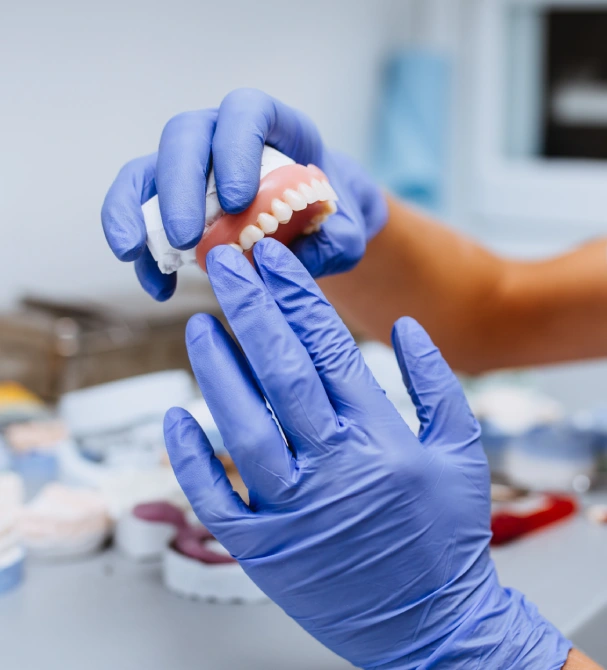
Dentures and partial dentures replace missing teeth with removable prosthetics that restore chewing function, support the facial structure, and prevent remaining teeth from shifting into the gaps left by tooth loss. The alternative, leaving a full or partial arch unreplaced, accelerates bone resorption, strains the remaining teeth, and alters the face’s appearance as the jaw loses its support. For patients in Pleasant Hill navigating that transition while still wanting to look their best at family gatherings in the Pleasant Hill Recreation District or across a lunch table in Concord, the goal is a prosthetic that fits reliably from the start and maintains that fit as the underlying anatomy changes.
At Cosmetic Dental Spa Ricardo M. Perez, DDS, we provide custom full dentures and partial dentures in Pleasant Hill, CA, designed to fit the current state of your mouth and built with the changes that come over time in mind.
What Are Dentures and Partial Dentures?
A full denture replaces all the teeth on either the upper or lower arch. It rests on the gumline and is held in place through suction (upper) or a combination of muscle control and ridge contact (lower). An upper denture covers the palate; a lower denture is horseshoe-shaped to leave room for the tongue.
A removable partial denture replaces one or several missing teeth in an arch where some natural teeth remain. Metal or flexible clasps anchor the partial to the existing teeth, providing retention without covering the full arch. Both prosthetic types are custom-fabricated from impressions of the patient’s mouth, so the fit, shade, and proportion are matched to the individual rather than drawn from a generic mold.
What Can Dentures and Partials Address?
Full Arch Tooth Loss
When all teeth on an arch have been lost or require extraction, a full denture restores the ability to chew, speak clearly, and maintain facial volume. Without replacement, the muscles and soft tissue collapse inward as the bone resorbs.
Multiple Missing Teeth With Remaining Natural Teeth
A partial fills the gaps in an arch while the remaining natural teeth stay in place. It prevents existing teeth from drifting into the open spaces and reduces the uneven bite forces created by missing teeth.
Facial Volume and Lip Support
Tooth loss reduces the vertical dimension of the face and causes the lips and cheeks to sink inward. A properly fitted prosthetic restores the support structure that maintains facial proportions.
Transition Between Extraction and Implant Placement
Immediate or temporary dentures can serve as a functional bridge during the healing period before permanent implant-supported restorations are placed.
Who Are Dentures and Partials For?
Patients who have lost all teeth on one or both arches and need a functional replacement while exploring longer-term options
Anyone with multiple missing teeth whose remaining dentition is stable and healthy enough to support a partial
Patients who are not currently implant candidates due to bone volume or medical considerations, and need a removable solution in the interim
Individuals who prefer a non-surgical tooth replacement option
Patients transitioning from a failing dentition who need interim coverage during the treatment sequence
When Are Dentures Not the Right Fit?
Removable prosthetics are a practical solution, but they carry limitations worth understanding honestly.
You have adequate bone for implant-supported options
Fixed or implant-anchored restorations provide better stability, preserve bone, and require less ongoing adjustment than conventional dentures. If implant candidacy exists, it is worth evaluating alongside removable options.
Remaining teeth need treatment first
Partial crowns placed over untreated decay or gum disease will not perform predictably, and the clasps can transfer force to compromised teeth, accelerating their deterioration.
Your bone ridge has resorbed significantly
Severely resorbed ridges make conventional denture retention difficult. Implant overdentures may be a more stable solution even in cases of significant bone loss.
Our Denture Process
Diagnostic Records and Treatment Planning
Impressions, bite records, and photographs establish the starting point. For patients who still have teeth to be extracted, the sequence of extraction and denture delivery is carefully planned to minimize time spent without functional teeth.
Custom Fabrication
Your prosthetic is fabricated from your exact impressions in a shade and shape matched to your natural appearance. For full dentures, tooth selection is guided by your facial proportions and any photographs of your prior dentition.
Fitting and Adjustment
The prosthetic is seated and evaluated for fit, bite alignment, and comfort. Initial adjustments are made at the delivery appointment, and follow-up visits address any pressure points or occlusal refinements needed as the mouth adapts.
Ongoing Maintenance
Dentures require periodic relining as the underlying bone changes shape over time. Regular appointments track the fit and catch the need for adjustment before it becomes significant discomfort.
Before and After Your Appointment
Before Your Appointment
- If teeth are being extracted as part of the transition, ask about immediate dentures so you are not without teeth during the healing period.
- Bring photos of your natural smile if available. They are useful for guiding shade selection and tooth shape decisions.
- Discuss any past denture experience, including what fit well or poorly, so the current fabrication can avoid repeating those issues.
After Your Appointment
- Remove and clean your denture after meals, and store it in water or denture solution overnight to prevent dehydration-induced warping.
- Sore spots in the first few weeks of wear are normal and resolved with a brief adjustment appointment. Do not try to adjust the prosthetic yourself.
- Return for scheduled reline assessments as the bone underneath the denture continues to change, particularly in the first year after extraction.
Why Choose Dr. Perez for Dentures and Partials?
Prosthetic fabrication here begins with cosmetic attention to proportion, shade, and the prosthetic’s relationship to the face. A denture that looks obviously artificial undermines the confidence the patient was hoping to restore. The goal of this practice is a result that reads as natural in conversation and in photos, not one that is simply present.
Patients who have worn poorly fitting or aesthetically disappointing prosthetics elsewhere find that the design process here, including the attention to facial support and the time spent on bite verification, produces a different kind of result.
Frequently Asked Questions
How long do dentures last?
The prosthetic itself typically lasts five to eight years before the material wears out or the fit changes enough to warrant replacement. The bone underneath a denture changes continuously, so relining to update the fit is needed more frequently, often every two to three years.
Are partial dentures comfortable to wear?
Partials require an adjustment period of several weeks as the mouth adapts. Initial awareness of the clasps and the bulk of the prosthetic is normal and fades for most patients. A partial that causes persistent pain or pressure after the adjustment period needs to be evaluated and refined.
Does Dr. Perez accept insurance?
Yes. Full and partial dentures are covered by most dental plans as a prosthetic benefit, subject to frequency limitations and waiting periods. Coverage for immediate dentures varies. The team verifies your specific benefits before scheduling treatment.
How much do dentures and partials cost?
Cost varies based on the type of prosthetic (full versus partial), the number of arches involved, the materials used, and whether extractions or other preparatory treatment are needed beforehand. Factors include fabrication complexity, the number of follow-up adjustments included, and the approach to relining over time.
A Prosthetic That Fits Your Life
Replacing missing teeth is a functional and personal decision. The right prosthetic fits reliably, looks natural, and holds up through normal daily use. At Cosmetic Dental Spa Ricardo M. Perez, DDS in Pleasant Hill, CA, every denture and partial is designed with that standard in mind. Schedule your consultation today.
Cosmetic Dental Spa Ricardo M. Perez, DDS
Dentistry Powered by Innovation
3D DIGITAL IMAGING
Cone beam imaging captures detailed three-dimensional views of teeth, roots, and bone that standard X-rays cannot provide.
CEREC SAME-DAY CROWNS
Chairside CAD/CAM technology designs and mills permanent ceramic crowns in the office, completing the entire restoration process in a single visit without temporaries or lab waiting periods.
Intra-oral Scanning
Digital impressions replace the discomfort of traditional impression trays with a quick, precise 3D scan of the teeth, supporting planning and accurate treatment previews.
Diode Laser Technology
Laser-assisted procedures enable precise gum contouring, soft tissue treatment, and selected periodontal procedures with reduced bleeding and faster healing.