
Dental Implants in Pleasant Hill, CA
- Modern Technology
- Cosmetic Dentistry
- Personalized Care
- Crafted Smiles
- Natural Results
- Same-Day Solutions
Permanent Tooth Replacement With Real Function
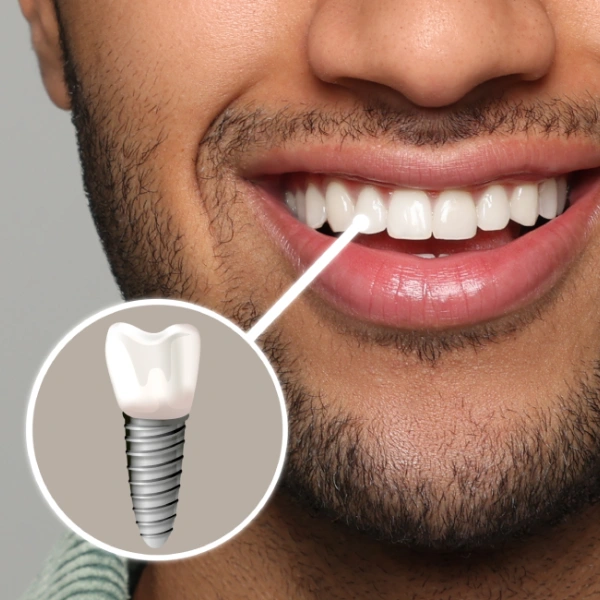
Dental implants replace missing teeth with a titanium structure anchored in the jawbone, topped with a custom crown that feels and functions like a natural tooth. Unlike bridges or dentures, they do not require alteration of adjacent teeth or removal at night. Tooth loss affects more than appearance: bone loss begins within months of an extraction, and neighboring teeth gradually shift toward the gap. For patients in Pleasant Hill who have been navigating that gap through busy seasons, through summers on the Canal Trail, and winters commuting in on I-680, the longer the replacement is delayed, the more the surrounding structure changes and the more involved the correction becomes.
At Cosmetic Dental Spa Ricardo M. Perez, DDS, we provide dental implants in Pleasant Hill, CA, for patients replacing a single tooth, multiple teeth, or a full arch.
What Are Dental Implants?
A dental implant is a three-part restoration: a titanium post that is surgically placed into the jawbone, an abutment that connects the post to the visible restoration, and a custom crown, bridge, or denture attached above the gumline. The titanium integrates with the surrounding bone through a process called osseointegration, creating a stable, load-bearing anchor that functions like a natural tooth root. They distribute bite force directly into the bone, which preserves bone volume in a way that other replacement options cannot.
What Can Dental Implants Address?
Single Missing Teeth
A single-tooth implant fills the gap without crowning the adjacent teeth or creating a removable prosthetic. The result is a permanent, independent tooth that does not affect neighboring teeth.
Multiple Missing Teeth
Implant-supported bridges replace several consecutive missing teeth by anchoring them to implants rather than the natural teeth on either side of the gap, preserving those teeth and eliminating the need to prepare them for crowns.
Full Arch Replacement
Full-arch implant restorations replace all teeth on the upper or lower arch using four to six implants to support a fixed prosthetic. This eliminates the instability, dietary restrictions, and bone loss associated with traditional full dentures.
Bone Loss Prevention
Tooth roots stimulate the jawbone through the forces of chewing. When a tooth is lost, that stimulation stops, and the bone begins to resorb. Implants restore that mechanical stimulation, maintaining bone volume in a way that dentures and bridges cannot.
Who Are Dental Implants For?
Adults who are missing one or more teeth and have sufficient bone volume in the jaw to support implant placement
Patients whose extraction site has healed and who want a permanent replacement rather than a temporary or removable option
Anyone with a failing tooth who wants to plan removal and replacement as a coordinated sequence rather than two separate decisions
Patients who wear dentures and are experiencing instability, soreness, or difficulty eating due to bone loss under the denture
Individuals who want the chewing function, appearance, and maintenance routine of natural teeth rather than a prosthetic appliance
When Are Implants Not the Right Fit?
Insufficient bone volume
If bone loss after extraction is significant, a bone graft is needed to rebuild the ridge before an implant can be placed. This extends the timeline but does not permanently disqualify a patient from implant candidacy.
Uncontrolled systemic conditions
Unmanaged diabetes, active autoimmune conditions, and certain medications affect healing and osseointegration. Medical clearance and treatment stabilization precede the implant procedure in these cases.
Active smoking
Smoking significantly increases implant failure rates by impairing blood flow and healing. Cessation before and during the osseointegration period substantially improves outcomes.
Active periodontal disease
Placing implants in a mouth with untreated gum disease exposes them to the same bacterial environment that caused tooth loss. Periodontal stabilization comes first.
Our Dental Implant Process
3D Imaging and Treatment Planning
CBCT imaging maps bone density, volume, and proximity to nerves and sinuses with the precision required for safe implant positioning. The surgical placement is planned in 3D before the procedure begins.
Bone Grafting (If Needed)
Patients with insufficient bone volume at the site undergo grafting to rebuild the foundation. Healing time after grafting is required before the implant can be placed.
Implant Placement
The titanium post is placed into the prepared site in the jawbone during a surgical appointment. Local anesthesia is used, and sedation is available for patients who prefer it. A healing cap is placed, and osseointegration begins, typically taking three to six months.
Abutment and Crown Placement
Once the implant has fully integrated, the abutment is attached, and a custom crown is fabricated and placed. The crown is shade-matched and contoured to fit naturally into the surrounding smile.
Before and After Your Appointment
Before Your Appointment
- Inform the team of all current medications, particularly blood thinners, immunosuppressants, and bisphosphonates, which can affect bone healing.
- Arrange transportation if sedation is planned. Plan for a quiet recovery day following the surgical appointment.
- Stop smoking as far in advance as possible to improve the healing environment. The team can provide support resources if needed.
After Your Appointment
- Eat soft foods for the first several days after placement. Avoid hard, crunchy, or sticky items on the implant side until initial healing is well established.
- Manage swelling by applying ice to the outside of the face in 20-minute intervals for the first 24 hours.
- Maintain excellent oral hygiene around the implant site as directed. Infection at the implant site is the leading cause of early implant failure and is almost entirely preventable with proper care.
Why Choose Dr. Perez for Dental Implants?
Implant planning at Cosmetic Dental Spa Ricardo M. Perez, DDS, draws on 3D imaging, advanced surgical assessment, and a treatment philosophy that considers the entire mouth. Dr. Perez’s background in restorative and cosmetic dentistry means the crown placed on top of your implant is planned with the same aesthetic attention as any visible restoration in the practice.
For patients who have been told elsewhere that they are not implant candidates due to bone loss, a consultation here may reveal that grafting options exist. For patients who are good candidates but uncertain about the timeline or the surgical process, the consultation is designed to answer every question with transparency and no pressure.
Frequently Asked Questions
How long do dental implants last?
With proper care and consistent dental visits, dental implants can last decades, often a lifetime for the implant post itself. The crown on top may need replacement after 15 to 25 years, depending on maintenance and its wear.
Are dental implants painful to get?
The surgical procedure is performed with the use of local anesthesia, so discomfort during placement is minimal. Some soreness and mild swelling in the days following are expected and manageable with over-the-counter pain relief.
How long does the dental implant process take?
The full timeline, from placement through final crown delivery, typically ranges from three to nine months, depending on whether grafting is needed and how quickly osseointegration progresses. Cases without grafting and with adequate bone volume move through the process faster.
Does Dr. Perez accept insurance?
Yes. However, implant coverage varies significantly by plan. Some plans cover the crown component as a prosthetic benefit but do not cover the surgical placement. Others exclude implants entirely. The team reviews your specific benefits and provides a clear picture of your out-of-pocket estimate before treatment begins.
How much do dental implants cost?
Cost depends on the number of implants, whether bone grafting is required, imaging needs, and the type of restoration placed on the implant. Factors affecting your total include single versus multiple implants, the need for preparatory procedures, and the material of the final crown or prosthetic.
A Permanent Solution Built to Last
A missing tooth does not stay a simple problem. The longer the gap remains, the more the surrounding teeth and bone are affected. At Cosmetic Dental Spa Ricardo M. Perez, DDS in Pleasant Hill, CA, implant treatment is planned from the first appointment with the long-term result in mind. Schedule your consultation today.
Cosmetic Dental Spa Ricardo M. Perez, DDS
Dentistry Powered by Innovation
3D DIGITAL IMAGING
Cone beam imaging captures detailed three-dimensional views of teeth, roots, and bone that standard X-rays cannot provide.
CEREC SAME-DAY CROWNS
Chairside CAD/CAM technology designs and mills permanent ceramic crowns in the office, completing the entire restoration process in a single visit without temporaries or lab waiting periods.
Intra-oral Scanning
Digital impressions replace the discomfort of traditional impression trays with a quick, precise 3D scan of the teeth, supporting planning and accurate treatment previews.
Diode Laser Technology
Laser-assisted procedures enable precise gum contouring, soft tissue treatment, and selected periodontal procedures with reduced bleeding and faster healing.