
Inlays & Onlays in Pleasant Hill, CA
- Modern Technology
- Cosmetic Dentistry
- Personalized Care
- Crafted Smiles
- Natural Results
- Same-Day Solutions
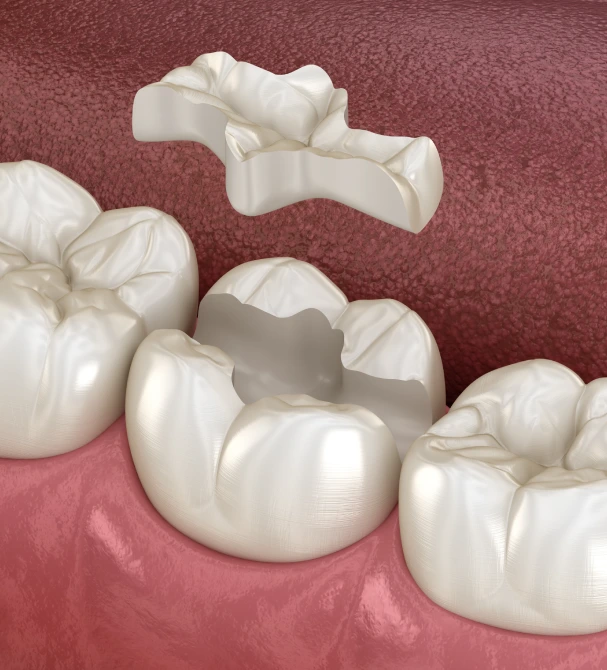
Precise Restorations That Preserve More of Your Natural Tooth
Dental inlays and onlays restore back teeth with moderate damage or decay using a custom-fabricated porcelain or ceramic restoration that fits precisely into or over the damaged area, preserving significantly more healthy tooth structure than a crown while delivering better durability and coverage than a direct composite filling. Back molars bear the heaviest chewing forces, and for patients in Pleasant Hill whose routines include afternoon wine from the nearby Livermore Valley, morning espresso pulls, and the jaw tension that accumulates on long I-680 commutes through the Monument interchange, that wear adds up. When a cavity or cracked cusp has grown beyond what composite can reliably restore, but the tooth doesn’t need full crown coverage, an inlay or onlay is the precisely calibrated answer.
At Cosmetic Dental Spa Ricardo M. Perez, DDS, we provide dental inlays and onlays in Pleasant Hill, CA, as part of a restorative approach that starts with the long-term health of the tooth.
What Are Inlays and Onlays?
An inlay fits within the cusps of a back tooth, restoring the central chewing surface without covering the outer edges. It is used when the damage or decay is confined to the area between the cusps, and a conventional filling would be too large to perform reliably.
An onlay extends beyond the cusps to cover one or more of the outer edges of the tooth. It is appropriate when the damage reaches the cusps themselves and a conventional filling cannot adequately protect the remaining structure, but a full crown would remove more healthy tooth than the situation needs.
What Can Inlays and Onlays Address?
Moderate Decay Too Large for a Filling
When a cavity has grown beyond the size that composite resin can reliably restore, a direct filling becomes more prone to fracture and marginal leakage over time. An inlay provides the same restorative coverage in a more durable, precisely fitted form.
Cracked Cusps Without Full Structural Compromise
A cusp that has fractured but left the majority of the tooth intact does not necessarily require a full crown. An onlay covers the damaged cusp and protects the remaining structure without removing healthy enamel, as a crown preparation would require.
Large or Deteriorating Existing Fillings
A metal or composite filling that has been in place for years may exhibit microleakage, cracking, or marginal breakdown. An inlay or onlay replacing it restores the tooth with better-fitting material and a longer anticipated lifespan.
Conservation of Natural Tooth Structure
For patients who want to preserve as much natural tooth as possible while still addressing significant damage, the minimal preparation required for an inlay or onlay is a clinically meaningful advantage over a crown.
Who Are Inlays and Onlays For?
Patients with moderate decay or damage on a back tooth that exceeds what a composite filling can reliably address
Anyone with a cracked cusp that does not require full crown coverage
Patients with older, large fillings showing signs of deterioration who want a more durable replacement
Individuals who have been told they need a crown but want to explore whether a less invasive option is clinically appropriate
Patients who prefer tooth-colored porcelain or ceramic over metal restorations in visible or semi-visible areas
When Are Inlays and Onlays Not the Right Fit?
The tooth is structurally too compromised
When fractures extend below the gumline or the remaining tooth structure cannot reliably support a bonded restoration, a crown provides the full-coverage protection the situation requires.
The damage is minor
A small cavity or minor wear that a conventional composite filling can address well does not need the additional fabrication step and cost of an inlay. The recommendation aligns with the actual extent of the problem.
Active infection or abscess is present
Pulp involvement requires root canal treatment before any restoration is placed, and the treated tooth may ultimately need a crown rather than an inlay, depending on the remaining structure.
Our Inlay and Onlay Process
Examination and Treatment Planning
We will evaluate the extent of decay or damage, the structural integrity of the remaining tooth, and the forces the restored tooth will need to withstand. The decision between an inlay, onlay, or crown is based on these specifics, not a default preference for any one approach.
Tooth Preparation and Impressions
The damaged or decayed area is removed, and the tooth is shaped to receive the restoration. Impressions or a digital scan are taken, and a temporary restoration is placed while the permanent piece is fabricated.
Placement and Bonding
The inlay or onlay is checked for fit, contact with adjacent teeth, and bite alignment before bonding. The restoration is cemented with precision, margins are sealed, and the bite is confirmed before the appointment concludes.
Before and After Your Appointment
Before Your Appointment
- Note any sensitivity, pressure discomfort, or cracking sounds when you chew, as these symptoms help confirm whether the problem has extended to the pulp and may change the treatment sequence.
- Avoid hard foods on the affected side between the preparation and delivery appointments while the temporary restoration is in place.
After Your Appointment
- Some mild temperature sensitivity after placement is normal and resolves within a few weeks as the bonded margins settle.
- Inlays and onlays are cleaned with regular brushing and flossing. No special care is required beyond standard oral hygiene and regular dental visits.
- Contact the office if the bite persists at a high level after the first few days, or if sensitivity increases rather than decreases after the first week.
Why Choose Dr. Perez for Inlays and Onlays?
The decision to use an inlay or onlay rather than defaulting to a crown is a clinical judgment that requires both accurate imaging to assess the tooth and a restorative philosophy to choose the least invasive appropriate treatment. At this practice, that philosophy is consistent: preserve what is healthy, restore what is damaged, and make the decision that serves the patient’s long-term oral health rather than the one that delivers the fastest result.
The precision fit of every inlay and onlay here reflects the same cosmetic attention to margin accuracy and shade matching that goes into every visible restoration at this practice.
Frequently Asked Questions
What is the difference between an inlay, an onlay, and a crown?
An inlay restores the central chewing surface within the cusps. An onlay extends to cover one or more cusps. A crown covers the entire tooth above the gumline. Each step up in coverage involves more tooth preparation.
How long do inlays and onlays last?
With proper care, porcelain inlays and onlays typically last 10 to 20 years. Longevity depends on the tooth’s location, the patient’s bite forces, oral hygiene, and whether grinding habits are managed with a nightguard.
Does Dr. Perez accept insurance?
Yes. Inlays and onlays are covered by some dental plans as restorative procedures, though coverage classifications vary. Some plans categorize them as filling, while others classify them more closely with crowns. The team verifies your specific coverage and informs you of any out-of-pocket portion before treatment is scheduled.
How much do inlays and onlays cost?
Cost depends on the tooth involved, whether an inlay or onlay is used, the material selected, and your insurance coverage. Factors include the size of the restoration, the number of surfaces covered, and any imaging or preparatory treatment required.
The Precisely Right Amount of Treatment
Restoring a damaged tooth well means doing enough, not more than necessary. At Cosmetic Dental Spa Ricardo M. Perez, DDS in Pleasant Hill, CA, the recommendation you receive is the one your tooth actually needs. Schedule your consultation today.
Cosmetic Dental Spa Ricardo M. Perez, DDS
Dentistry Powered by Innovation
3D DIGITAL IMAGING
Cone beam imaging captures detailed three-dimensional views of teeth, roots, and bone that standard X-rays cannot provide.
CEREC SAME-DAY CROWNS
Chairside CAD/CAM technology designs and mills permanent ceramic crowns in the office, completing the entire restoration process in a single visit without temporaries or lab waiting periods.
Intra-oral Scanning
Digital impressions replace the discomfort of traditional impression trays with a quick, precise 3D scan of the teeth, supporting planning and accurate treatment previews.
Diode Laser Technology
Laser-assisted procedures enable precise gum contouring, soft tissue treatment, and selected periodontal procedures with reduced bleeding and faster healing.