Sleep Apnea Therapy in Pleasant Hill, CA
- Modern Technology
- Cosmetic Dentistry
- Personalized Care
- Crafted Smiles
- Natural Results
- Same-Day Solutions
Treating Mild to Moderate Sleep Apnea Without a CPAP Machine
Sleep apnea therapy at this practice offers two non-surgical options for patients with mild to moderate obstructive sleep apnea: oral appliance therapy, which repositions the jaw to maintain airway patency during sleep, and NightLase® laser treatment, which uses the Fotona LightWalker® Nd:YAG wavelength to tighten soft palate tissue and reduce airway collapse. For patients in the Contra Costa area who have been prescribed a CPAP device and abandoned it, the compliance problem is almost always the equipment, not the motivation. A device that fits in a travel bag, makes no noise, and requires no power source is the one patients actually use on overnight trips to Tahoe and red-eye flights home from the East Coast, and consistent use is what produces clinical outcomes.
At Cosmetic Dental Spa Ricardo M. Perez, DDS, we provide sleep apnea treatment in Pleasant Hill, CA, including NightLase® laser therapy and oral sleep appliances for patients seeking alternatives to CPAP.
What Is Sleep Apnea Therapy?
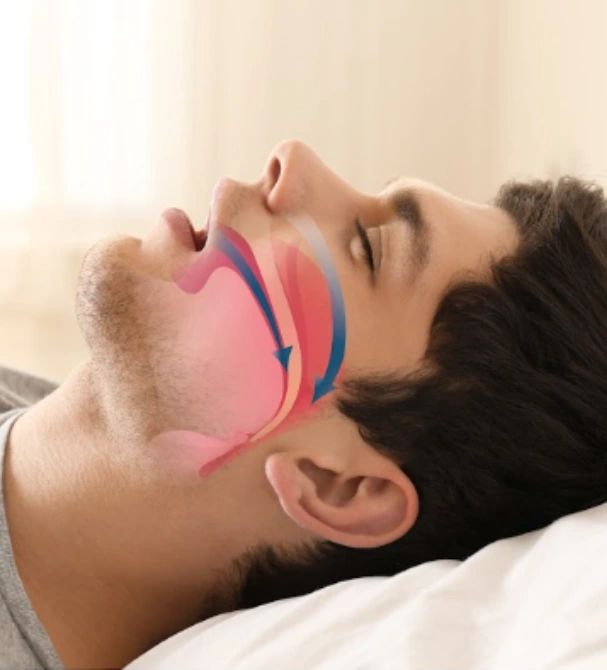
Obstructive sleep apnea occurs when the soft tissues of the upper airway collapse during sleep, partially or fully blocking airflow and causing repeated microarousals as the body responds to drops in oxygen. The consequences accumulate over time: fragmented sleep, excessive daytime fatigue, cardiovascular strain, cognitive impairment, and, in more severe cases, elevated blood pressure and cardiac risk.
Dental sleep medicine addresses the airway from within the oral cavity. Mandibular advancement devices (oral appliances) hold the lower jaw in a slightly forward position during sleep, which tightens the soft tissue surrounding the airway and prevents the collapse. NightLase® achieves a similar structural effect without a device, using laser energy to stimulate collagen contraction and remodeling in the soft palate and uvula, resulting in a firmer tissue architecture that is more resistant to collapse.
What Can Sleep Apnea Treatment Address?
Mild to Moderate Obstructive Sleep Apnea
Both oral appliance therapy and NightLase® are most effective in the mild-to-moderate severity range. Patients with an AHI (apnea-hypopnea index) below 30 who have been diagnosed via sleep study are candidates for evaluation.
CPAP Intolerance
Patients who have a CPAP prescription but cannot tolerate consistent use are the primary population for oral appliance therapy. Studies show that a device patients actually wear produces better clinical outcomes than a CPAP machine that sits unused beside the bed.
Snoring Without Confirmed Apnea
Snoring without an associated drop in oxygen levels is a softer indication, but for patients whose snoring significantly disrupts their partner’s sleep, NightLase® treatment can reduce snoring frequency and intensity.
Daytime Fatigue and Non-Restorative Sleep
Patients who wake unrefreshed, experience afternoon energy drops, or have difficulty sustaining concentration may have undiagnosed or undertreated sleep-disordered breathing contributing to those symptoms.
Who Is Sleep Apnea Therapy For?
Patients with a confirmed sleep study diagnosis of mild to moderate obstructive sleep apnea
Individuals who have been prescribed CPAP but are not using it consistently due to mask discomfort, claustrophobia, or travel inconvenience
Anyone referred by their physician or sleep specialist for oral appliance fitting as a first-line or adjunct treatment
Patients whose snoring is disruptive and who want a non-surgical, non-CPAP option
Individuals interested in NightLase® who have confirmed mild to moderate apnea and prefer a device-free approach
When Is Dental Sleep Therapy Not the Right Fit?
Severe obstructive sleep apnea
Patients with an AHI above 30 typically require CPAP as the primary treatment. Oral appliances may be used as adjuncts but are not considered equivalent to first-line therapy for severe disease.
Central sleep apnea
This form of apnea originates in the central nervous system rather than airway obstruction. Oral appliances and NightLase® do not address the neurological component and are not appropriate for this diagnosis.
Significant dental issues
Mandibular advancement devices place sustained pressure on the teeth and the jaw joint. Patients with active TMJ dysfunction, significant periodontal disease, or insufficient remaining dentition may not be candidates for appliance therapy without first addressing those conditions.
Our Sleep Apnea Treatment Process
Medical Coordination
A confirmed sleep study diagnosis is required before treatment begins. We will work with your sleep physician or primary care provider to ensure treatment is appropriate for their specific diagnosis and AHI.
Oral Appliance Fitting
For patients pursuing mandibular advancement therapy, impressions and bite records are taken to fabricate a custom appliance calibrated to advance the jaw by a precise, comfortable amount. The appliance is titrated over follow-up appointments to find the position that reduces apnea events while remaining comfortable.
NightLase® Treatment Protocol
NightLase® is delivered over three sessions spaced approximately three weeks apart. Each session is 20 to 30 minutes and requires no anesthesia. The laser energy is directed at the soft palate and uvula, stimulating a collagen response that gradually tightens and firms the tissue.
Follow-Up and Outcome Assessment
A follow-up sleep study or home monitoring after treatment confirms the clinical response. Adjustments to the appliance or additional NightLase® sessions are made based on the results.
Before and After Your Appointment
Before Your Appointment
- Bring your sleep study results and any documentation from your physician or sleep specialist to the consultation.
- Note which symptoms bother you most: snoring, morning headaches, fatigue, or apnea events witnessed by a partner. These help prioritize treatment goals.
- If you currently use a CPAP, bring information about your current settings and compliance data, if available.
After Your Appointment
- Oral appliance patients: wear the device every night from the start. Inconsistent use reduces effectiveness and extends the titration process.
- Some morning jaw soreness and increased salivation are expected during the adjustment period for appliance users. These typically resolve within the first few weeks.
- No downtime is required after sessions. Mild throat awareness is normal for a day or two after each session and resolves quickly.
Why Choose Dr. Perez for Sleep Apnea Therapy?
Dental sleep medicine requires both clinical tools and medical coordination to be done correctly. Fitting an appliance without a confirmed diagnosis and physician involvement is not the standard of care, and it is not the practice here. Every patient pursuing oral appliance therapy or NightLase® at this office has a sleep study on file and a treatment plan coordinated with their medical provider.
For patients who have struggled with CPAP compliance, the availability of an alternative that is quiet, portable, and requires no mask or power source often changes the trajectory of their treatment entirely.
Frequently Asked Questions
How does a dentist treat sleep apnea?
Dentists trained in dental sleep medicine fit custom oral appliances that advance the lower jaw during sleep, holding the airway open. The Fotona NightLase® protocol is a laser-based option that firms soft palate tissue to reduce collapse. Both approaches require a physician-confirmed diagnosis of sleep apnea before treatment begins.
What is NightLase® and how does it work?
NightLase® uses the Nd:YAG wavelength of the Fotona LightWalker® laser to deliver precisely controlled heat energy to the soft tissue of the upper airway. This stimulates collagen remodeling, gradually firming the soft palate and uvula and reducing the degree to which they collapse during sleep.
Does Dr. Perez accept insurance?
Oral appliance therapy for documented sleep apnea is covered by many medical insurance plans (not dental plans) when medical necessity is established. NightLase® is generally not covered as it is classified as an elective procedure by most insurers. The team helps identify your applicable coverage and coordinates with your medical insurer where applicable.
How much does sleep apnea therapy cost?
Cost varies depending on whether oral appliance therapy, NightLase®, or a combined approach is selected. Factors include the appliance type, the number of NightLase® sessions, and medical insurance reimbursement. The team provides a complete estimate at the consultation.
Better Sleep Starts With the Right Evaluation
CPAP is not the only option, and for patients who cannot tolerate it, it may not be a functional option at all. At Cosmetic Dental Spa Ricardo M. Perez, DDS in Pleasant Hill, CA, sleep apnea therapy is approached medically and practically, with the goal of treatment that the patient will actually use. Schedule your consultation today.
Cosmetic Dental Spa Ricardo M. Perez, DDS
Dentistry Powered by Innovation
3D DIGITAL IMAGING
Cone beam imaging captures detailed three-dimensional views of teeth, roots, and bone that standard X-rays cannot provide.
CEREC SAME-DAY CROWNS
Chairside CAD/CAM technology designs and mills permanent ceramic crowns in the office, completing the entire restoration process in a single visit without temporaries or lab waiting periods.
Intra-oral Scanning
Digital impressions replace the discomfort of traditional impression trays with a quick, precise 3D scan of the teeth, supporting planning and accurate treatment previews.
Diode Laser Technology
Laser-assisted procedures enable precise gum contouring, soft tissue treatment, and selected periodontal procedures with reduced bleeding and faster healing.